Prologue       In the spring of 2007 my widowed


ImagePrologue


I have been absent from my Blog for a while. In this away period I have been working on editing my book in between the call of my daily life. I am including the prologue to my book, a work in progress.

   In the spring of 2007 my widowed mother left her place of birth and a lifetime of living in Indiana and moved to my home in Upstate New York.  It had been apparent to me and my siblings for some time that Mom was struggling to live on her own.  But, my mother’s independent streak and her fierce Irish-German stubbornness did not allow her to leave her residence of fifty years easily. 

     When Mom moved in with my family and me, I thought she was still grieving the death of my father, her husband of over fifty years.  I had learned Mom no longer participated in the activities she once enjoyed; she rarely ventured out of her home.  All signs of depression I assumed. Naively, I believed that once Mom came to live with me she would find a new direction in life from the love my family would give her.  I hoped that my relationship with Mom would evolve into the nurturing, mother-daughter connection I had sought for years.  Yet, after only a few short weeks it became quite apparent all of my assumptions were completely wrong.

       Learning my mother had dementia, although not truly shocking, was not the ending I had in mind for our story together.  Eventually, during the six years that she lived with or near me we did develop a new relationship.  One I had not considered, but, still based on trust and love.  Getting to that final rapport took years of struggle between us.   In the beginning it was who is the child; who is the parent?  Later, that trust was required to let a loving bond blossom into total faith that decisions made on her behalf were for the best. 

     My emotional journey also sparked a transition of my faith.  My feelings about established religion had been evolving for several years.  Soon after Mom moved in with me, I stopped my rare attendance at mass.  My choice had nothing to do with my mother.  Rather, it was a decision that had been growing within me.  I felt more in touch with my idea of God when I was out in nature, or doing an activity with my friends or family.  Mass became a ritual that I dreaded and consequently attained nothing from.  Yet, the more involved I got with Mom’s care, the more aware I became of an inner voice guiding me.  I am by character a non-confrontational person.  Still, as I heard myself questioning doctors, working with insurance companies, dealing with family members and lawyers, I found the words coming from my lips sometimes were not my own.  I had not thought to say them, yet there they were being said.  I began to call my inner guidance my Angels.  It was through this realization that my spirituality grew and I connected with these higher beings that were sent to guide and comfort me.  I believe it was my Angels who first directed me to begin writing.    

     I did not write my thoughts down immediately upon my mother’s arrival.  It was only after many months that the need to release my growing frustrations began to take shape.  I joined a writing group at a local book store because I felt driven by my inner sense, what I call my Angels, to put my feelings into written word.  During my first session I met a group of ladies and we formed a lasting bond that strengthened as we each transformed into writers.  It was this group and our instructor that gave me the courage to record my feelings.  Even then, I did not believe I would take my thoughts and turn them into the book that follows.  As my writing developed, I realized my essays could be a comfort to those walking zombie like through the days of unknown dementia care and decisions as I was.  Consequently, I continued in my pursuit of finishing this book not only for myself but for others who would walk down the path my mother had taken me.  I hope it will bring them comfort and the knowledge they are not alone in their struggles. 

     To do justice to the 85 year life my mother led I have given you, the reader, a brief history of Mom’s life.  I felt that was important so that you too can understand the sorrow I felt in watching this woman, who accomplished so much, slide into nothing. 

     The essays written about the journey Mom and I took together fall in chronological order.  It is my hope that you will garner some camaraderie from my honesty, frustration, laughter, unexpected hurt and overall grief.  This book is for all of us struggling together in what I call, The Caretaker Nation.  


Remembering February


For close to a year the month of February has been looming just outside of my conscious.  February 21, 2013 will be the one year anniversary of my mother’s death and the 12 year anniversary of my father’s death.   I have prepared myself to be sad.  But, what I haven’t prepared myself for are the down times leading up to that day.

On January first of 2012 I was celebrating the start of the New Year with friends.  We were at a bar having chicken wings and beer.  That was when I received the first call about my mother not doing well.  With the help of my sister Roxann, who flew in from Georgia, we spent nearly two weeks watching my mother slowly succumb to pneumonia.  Then, miraculously she pulled herself back from the brink of death.  Bewildered from what we had prepared ourselves for, Mom’s death, and reality, Roxann wearily went home.  As January faded into February Mom improved to the point where some days she didn’t need the oxygen.

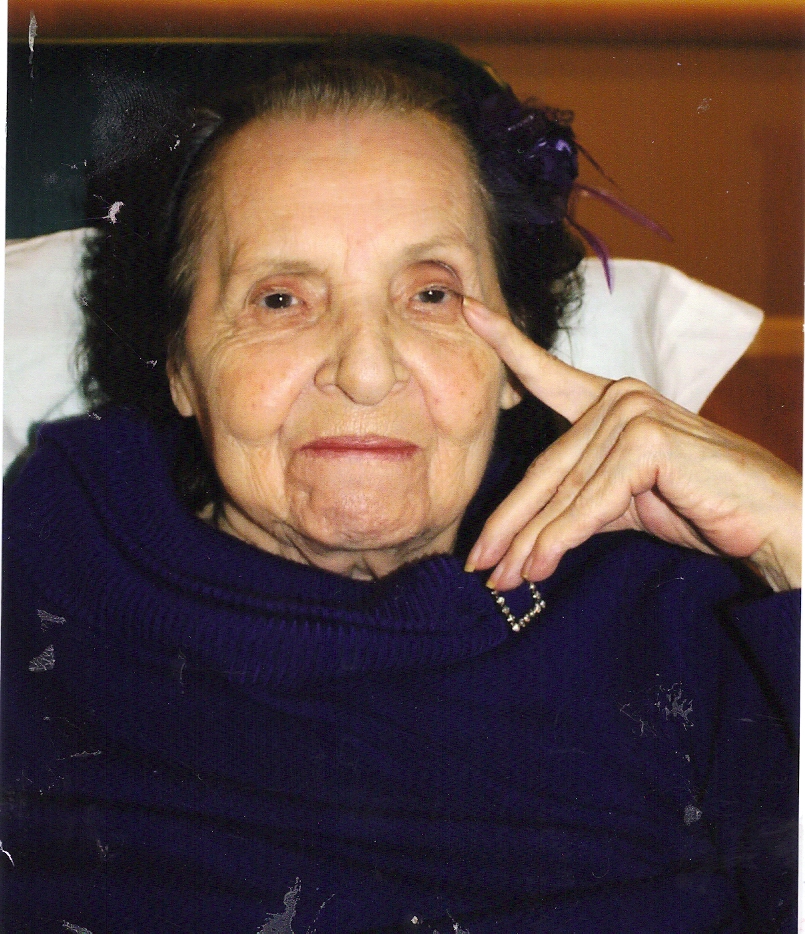
scan0001One weekend in February, I visited Mom on a Friday.  I even took her picture to send to my sisters because Mom looked so good after her close call with death.  Unbelievably, that following Monday I was called by the nursing staff because Mom was once again ill.  The change in Mom over the weekend was startling.  I saw the look of panic in her eyes as she struggled to breathe.  With the help of the nurse practitioner, who prescribed, and then the nurse, who administered the morphine, we were able to ease Mom’s discomfort and fear.  I sat with her most of the day until she fell asleep.  I left knowing I would need to get many tasks accomplished before I began, once again, waiting with Mom for death to finally relieve her of her painful existence here on earth.

The next morning, as I prepared myself and my home for the long hours of sitting with Mom the nurse called.  Mom was worse.  Since Mom’s illness the month before, her children had resolved not to continue the brutal cycle of stopping the pneumonia, with antibiotics, only to have the illness return very shortly afterward.  We were committed to shortening Mom’s downward spiral towards death for her sake, instead of prolonging her dementia bound life for us.  But, I won’t lie it was difficult to see my mother laboring to breathe and the fear in her face.  I gave the nod and morphine was administered so that she could rest easily.  That afternoon the nurse practitioner told me this was it; Mom would not recover this time.  I called Roxann.  She made plans to return to Upstate New York.

As suddenly as Mom had become ill, she died.  She died before Roxann could arrive.  She died within 48 hours of my initial phone call.  No one on the staff, not even the nurses, thought she would die that quickly.  Yet, I had a feeling all of that day, because I sensed my dad in her room with me.  I understood that he had come to take her to their afterlife.

I remember many aspects of those long days in January and the few days in February that led to our extended family standing in a grave yard, once again sheltering against the biting cold winds of an Indiana winter.  It is with those days ingrained in my subconscious that I sometimes find myself crying for no apparent reason.  Why certain songs can turn a bright day into one of melancholy.  My conscious mind continues to check items of my list of tasks to accomplish.  I go to work.  I make dinner.  I admire the beauty of the winter blue sky.  I enjoy the company of friends, the stimulation of a good workout.  Still, I never know when or why the tears will come.  They just do.

Court Date


I have been working on editing my upcoming book, A Slow Slide into Nothing.  Below is an excerpt about an experience Mom and I had together.

    Finally, the day arrived for Mom and me to sit before a judge and for her to explain her concerns.  The small judge’s chamber was filled with lawyers.  There was my lawyer, Mom’s lawyer, the lawyer appointed as her guardian by the courts, the judge and the court recorder.  I was nervous because Mom had been running late when I arrived to pick her up and then was too tired to dress herself.   I ended up having to put her socks and shoes on her.  I had felt rushed, knowing it was my responsibility to get us both before the judge on time.  We sat down; the judge looked at both of us solemnly.

Helping Yourself Help


I have been thinking lately about decisions I made for my mother.  During my day, I often run into people who are in some stage of being a caretaker for a parent.  Some are in the beginning stage of denial.  Some are in the panic stage of, what do I do now?  Others are in the end stage and either silently, or out loud, are praying for an easy death of their parent.  I recognize all of these stages, because, I experienced each one.

As I’ve said before, I don’t mind listening and giving advice when asked.  Sometimes the obvious is very clear to those looking in, but not clear at all when you are the participant.  Recently, I heard of a woman who was trying to work full-time and take care of her mother, who lives alone.  Not only does she live alone, but she cannot cook for herself, can’t get herself to the bathroom, can’t get herself dressed, the list continues.  Yet, this loving daughter is trying to figure out how to take care of her mother without bringing in extra help or removing her from her home.  As I write this, the situation sounds very obvious as to what needs to be done.  But, put yourself in that role and all kinds of emotional problems surface.  There are promises made: Mom, I won’t put you in a nursing home.  Of course I will always take care of you.  There are financial issues that come with many questions.  Can my parent pay for care?  What if my parent refuses to pay, but I need the help?  Can I take over financial control?

Personally, the most important conclusion I came to, after taking on the role of caretaker, and spending months becoming more and more stressed was to realize, I can’t do this on your own.  Struggling, without admitting you need help, leads to problems later.  I found, reaching out to others in the same situation helped me tremendously.  As I entered my caretaker role, there were others in the midst of it.  These people understood the ends and outs.  They were aware of doctors, facilities, and organizations that could help with guidance on what to do and what help was available.  They knew tricks on how to just get through the day.  For many women, and I say women because the caretaking generally falls to us, the decision to admit we need help can be covered with guilt.  But, guilt should not be involved.

As a caretaker, your first step is to take care of yourself.  If you fall ill or get hurt, then everyone is in trouble.  Bringing in help; taking hours, days, weekends off is not selfish, it is putting your role as caretaker first.  When you are rested then your patience comes easier.  The skills needed to handle your tasks flow smoothly.

The worst day of my life, and I can also say for my sister, was the day we took our mother to an Assisted Living Home for Dementia Patients.  Like many of her generation, Mom had a pre-conceived notion of a “nursing home”.  It took us hours to get her out of bed, dressed and into the car.  I still get emotional when I think of that day.  But, and this is huge, our mother grew to enjoy her new home.  She found she liked the independence of being out from under my control.  She made friends; the staff grew to love her.  As for our relationship, it returned to more of a mother-daughter one.  Since I was no longer trying to get her to take her medication, to bath, to eat, to go to sleep, to get out of bed, we could enjoy each other.  I took Mom out to lunch, we got her nails done.  She came to my house for holidays.  When she no longer felt comfortable doing those outings, we did puzzles and watched TV.

Looking back, each day seemed endless at times.  But, now I know, making the most of what time is left, and providing the best care, is essential.   Even if it means letting that care come from someone else.  Asking for and excepting help are all part of a good caretakers role. In the end, the decision to let go of some of my control was the best one I made as a caretaker.

Bad Day


Minor issues that would not normally upset me, or would cause a small amount of frustration before I moved on, have lingered with me all day.  At a celebration for the three ski team girls who graduated this spring, I didn’t take any pictures.  Never mind that we all had such a great time pictures weren’t really thought of until too late.  An appointment this morning went all wrong.  I realized that I should have sent a greeting card for an event, but the thought never crossed my mind until it was too late.  All minor issues that have grabbed my emotions and tangled them into a knot of regret.  It seems I am having a bad day that I can’t shake.

I am in a low place, and maybe this is the reason, why.   I find myself reflecting on my relationship with my mother.   I worry, that I hurt her feelings without knowing it.  My mind rambles back through my teen and young adult days.  Did I do and say things that were callous?  Was I so wrapped up in myself I forgot that Mom was a person with feelings, too?  I know I did.   I wonder how many times she forgave me and I was totally oblivious to her grace.  Today, even though it is silly, I’m struggling with these regrets that weigh heavy on my heart.

With each step of my life I have realized, as many woman do: my mother did the best she could.  When I only had two young toddlers, I could not even imagine how my mother handled three, along with three older children.  When my girls and I struggled through the teen years, I often reflected on my feelings about how mistreated I felt by my mother.  With age comes the vision of hindsight and with that, the realization Mom was probably struggling to know how to handle my teenage anxiety, just as I struggled with my girls.   I did come to one conclusion: Mom could have been more forth-coming with hugs.  Perhaps, some acknowledgement of accomplishments would have been nice.  I hated being told there were so many kids at the high school far worse off than me, when all I really wanted from Mom right then, was a hug and the words, “I love you.”   I carried that resentment with me for many years.  I believe that same resentment helped me to be a different and, hopefully, more loving mother to my girls.

We often learn from our mistakes.  But, as my mother used to tell me, “I hope you are watching and learning from your older sisters mistakes.”  I did watch and learn; not only my sisters’ but my mothers’.  Because, as Mom believed, each generation should learn from the old and carry that knowledge into the next.  Thanks, Mom.   I love you.

Re-birth


I have been many things in my life. A bare-footed child playing her way through a long summer in Indiana. A shy high school student who made herself try out and get into a performing choir. A college student finding her own identity on the campus she still thinks of as home. A young wife moving across many states to begin a life where she knew no one. A daughter, sister, mother, friend, teacher. All of these different phases of my life now combine, in a scattered way, inside my conscious. As I once again re-invent myself I take some part from each of those beings I once was and, hopefully emerge re-born.
I am a mother to my daughters, but they are grown and do not need me as they once did. I was once mother to my own mom as she slipped into dementia. That was a struggle for both of us. The word mother seems to have one meaning, the female parent of a child. But, we mother’s know it has so many more. We cradle our children to our breasts, snuggle them and kiss their beautiful heads. We watch them gallop freely away from us a young children, but know they will turn back to us when they become frightened. We argue with them as teens as they try to find their own definition of themselves. And we cry with excitement and loss as we watch them walk away from us on a college campus. At that moment we know they will truly never return to us as children. I realize my daughters are adults and quite capable of making decisions. Yet, I struggle when I know or feel a decision will not be the right one for them. Still, unless they ask, I try not to voice an opinion. At this point, I have to let them learn from their mistakes. Consequently, I, as so many other mothers before have done, must rebuild the image my daughters and I have of myself.
How do we mothers go about building that new relationship with our children? I am struggling with that now. How do I define to my girls that I no longer feel the need to mother them? In my opinion they turned out pretty good. I know I cannot be a girlfriend. But, can we be friends? Can we share experiences as adults? The trial begins as I realize I must stop myself from being a mother, and they will need to stop being a child. It is a difficult transition. I don’t think I ever successfully made that with my mother. But, I want to try with my daughters. I want to establish a relationship still built on trust, but not reliance. I want my daughters to come to me for advice, but not expect me to solve their problems. I want to respect their independence, but I need them to understand I need independence too. Most of all I want to have fun. I want to laugh with them over silly things. I want to enjoy our times together. I want us to find a common ground we can be comfortable with in our new roles.